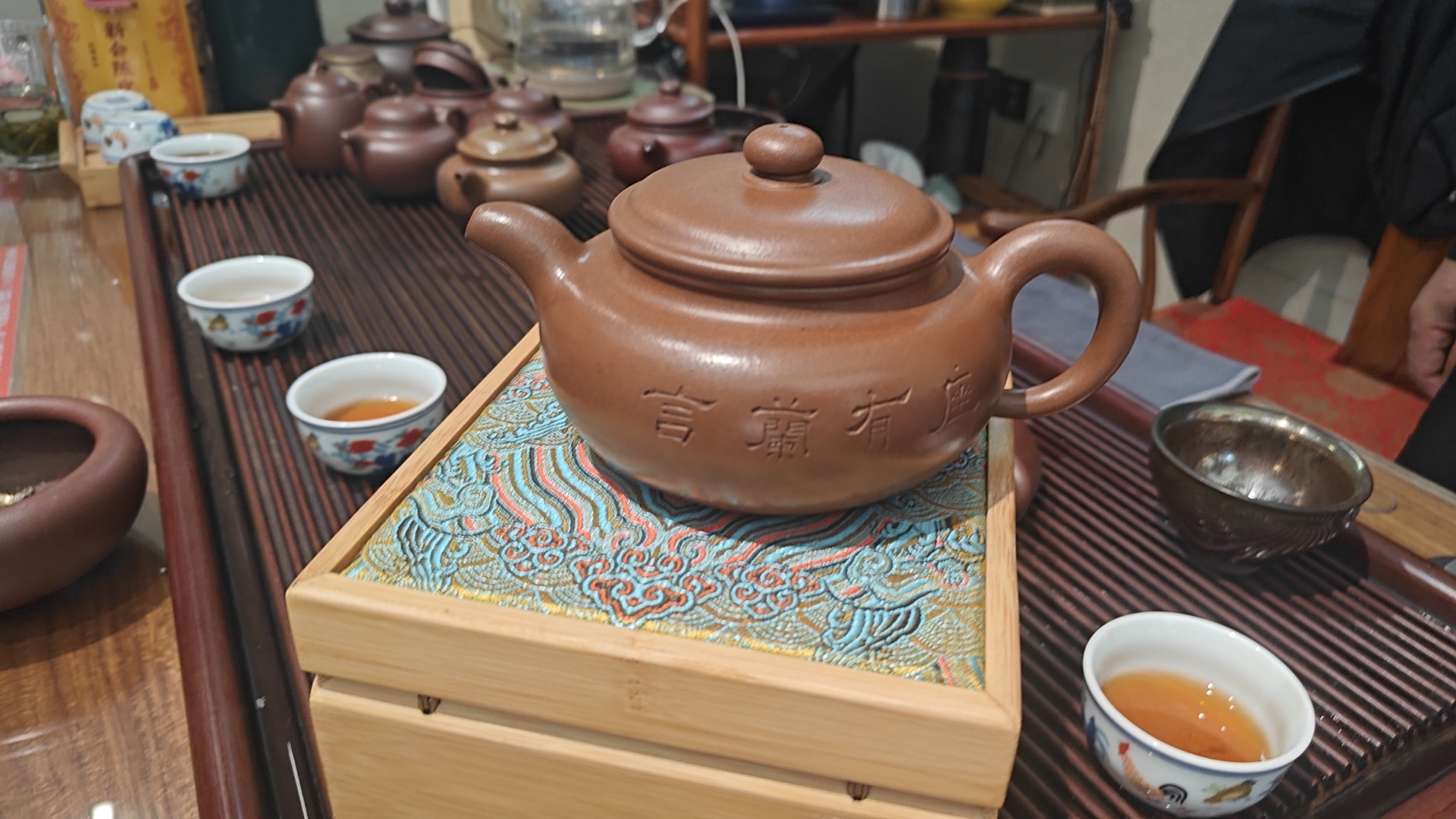
In the world of fine art, certain names define an entire era. In the realm of Chinese Zisha (Purple Clay) pottery, that name is Gu Jingzhou (1915–1996). Known as the "Grandmaster of Zisha," his works are the Mount Everest of ceramic art. Today, we explore a legendary piece—the De Zhong Teapot—a vessel that embodies the "Soul Covenant" between earth, stone, and the scholarly spirit.
The Grandmaster’s Touch: Who was Gu Jingzhou?
Gu Jingzhou was more than a craftsman; he was a philosopher of clay. He elevated Zisha from a functional folk craft to a high art form recognized by museums worldwide. His works are defined by mathematical precision and a "monumental" presence. As the saying goes in the auction world, a Gu Jingzhou piece is not just a purchase; it is a coronation of a collection.
The De Zhong Form: Virtue in Every Curve
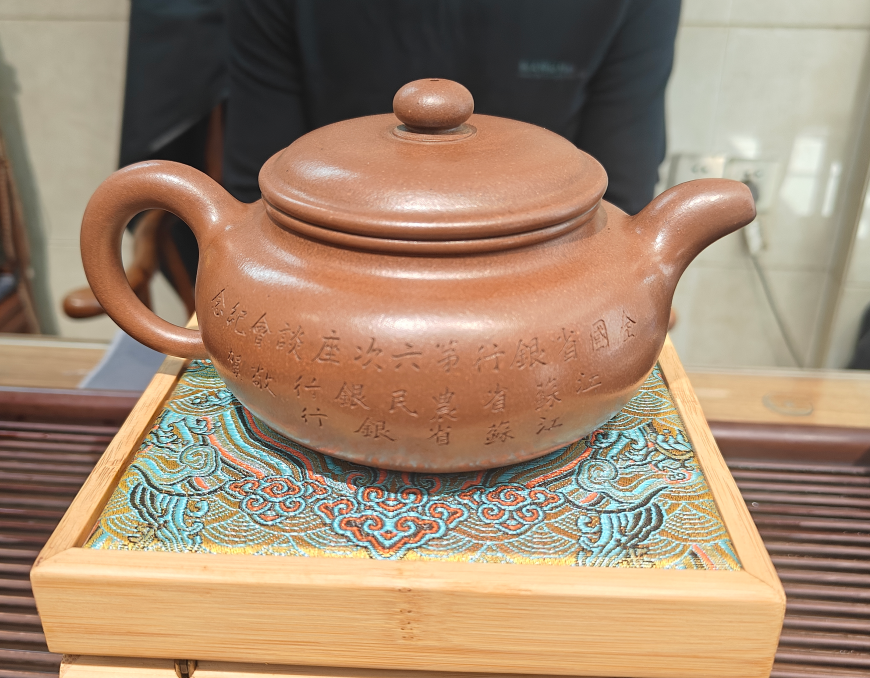
The De Zhong (德钟) shape was originally created by the Qing Dynasty master Shao Daheng, whom Gu Jingzhou admired above all others.
-
The Meaning: "De" (德) means Virtue, and "Zhong" (钟) means Bell. Together, the name suggests a character as upright and resonant as a ceremonial bell.
-
The Silhouette: It features a stable, grounded body, a flat lid that fits with microscopic accuracy, and a handle that offers perfect ergonomic balance.
-
Gu’s Interpretation: Gu Jingzhou’s De Zhong is celebrated for its "absolute proportions"—not a single line could be added or removed without breaking its silent harmony.
"Zuo You Lan Yan": Fragrant Words Among Friends
What makes this specific piece a "Grand Gathering" of arts is the masterful engraving on its surface. Adorned with the inscription "Zuo You Lan Yan" (座有兰言), it brings a deep literary dimension to the clay.
-
The Origins: This phrase originates from the I Ching (Book of Changes), signifying that "the words of like-minded friends are as fragrant as orchids."
-
The Artistic Fusion: Inscribed by a master engraver from the centennial Xiling Seal Art Society, the "Power of Stone" is chiseled into the "Soul of the Clay." This creates a stunning contrast where the vigorous strokes of the carving meet the warm, organic texture of the Zisha.
A Legacy in Your Hands
For a global collector, this teapot represents the "Holy Trinity" of Chinese art:
-
Lineage: The structural wisdom of Grandmaster Gu Jingzhou.
-
Material: Rare, high-fired Zisha clay that develops a jade-like patina over time.
-
Spirit: The centennial cultural backing of the Xiling Seal Art Society.
Conclusion: More Than a Vessel
Owning a Gu Jingzhou-style De Zhong teapot is an act of preserving history. It is a dialogue across time—from the ancient masters of the Qing Dynasty to the technical perfection of the 20th century, and finally to your tea table. It resonates like the lingering overtones of a Guqin, leaving an echo of elegance long after the tea is poured.